
Blog

Poliquin Live

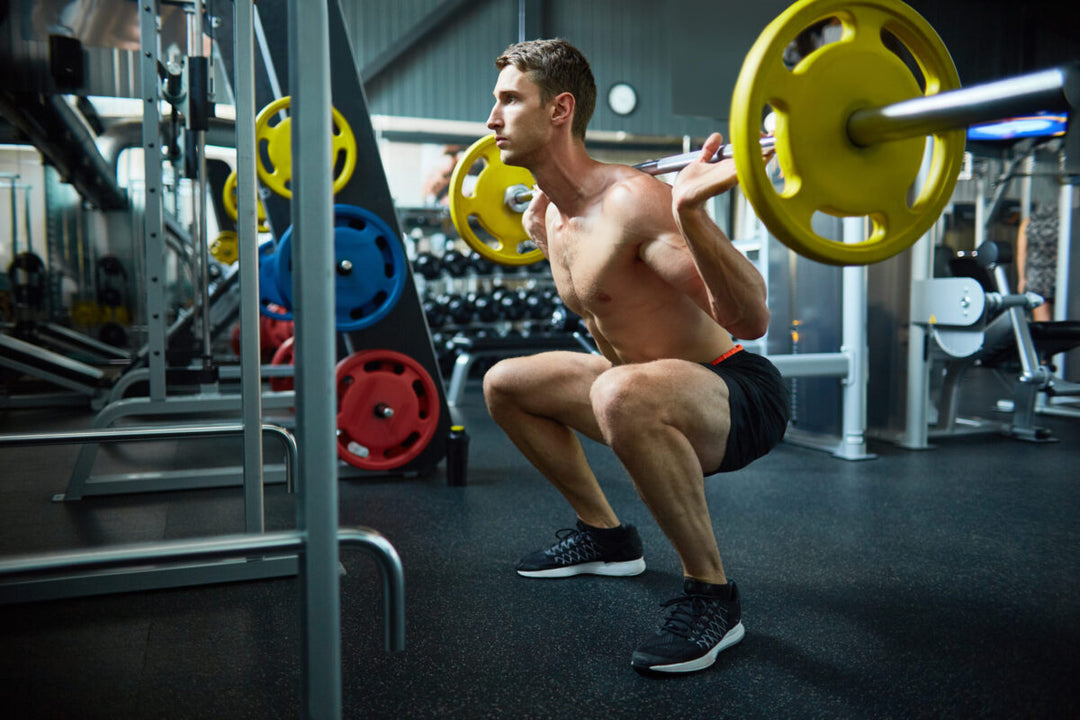
Tip 183: The classic 20-rep breathing squats, are they effective for building muscle mass and strength?

Sep 3


9/3/2010 8:33 AM  RssIcon

Tip 183: The classic 20-rep breathing squats, are they effective for building muscle mass and strength?

Short answer: Yes. I say this because quadriceps are primarily composed of Type IIa fibers and as such respond best to higher reps. Just look at the impressive thigh development of speed skaters and cyclers, even in the distance events.

One of the best high-rep squatters was Tom Platz. Platz, who finished third in the Mr. Olympia, had arguably the best thigh development of any bodybuilder…ever. He claims to have squatted 585 pounds for 23 reps, and in 1993 at a fitness expo in Germany he took on Fred Hatfield in a squatting exhibition. Hatfield had broken numerous world records in the squat in several weight classes – at one time holding the highest result ever with 1,014 pounds. As such, he earned the nickname “Dr. Squat.” The two men started by going for a 1-rep maximum; Platz finished with 775 pounds, and Hatfield bested that with 865. Then the weight was reportedly reduced to 505 pounds, and Platz did 23 reps to Hatfield’s 12.

The point of this example is that being able to perform high reps does not necessarily relate to single reps, and this ability is influenced by the neurological efficiency of the athlete. The Canadian National Synchronized Swim Team, for example, at one time had women who could perform bench presses with 135 pounds for 20 reps; however, they had trouble recruiting the more powerful Type IIb muscle fibers and as such would struggle with 145 pounds for a single. Some of this is genetic, as women tend to be less neurologically efficient than men, but some of this is trainable according to the law of specificity. If you’re a coach or an athlete, you must have an understanding of how neurological efficiency relates to long-term athletic performance – especially when dealing with young athletes.

I should also add that many of the fans of high-rep squats promote the importance of including a light set of straight-arm pullovers after the squats to help “expand” the rib cage. Some notable proponents include Arnold Schwarzenegger, Don Ross (one of my favorite writers) and Ellington Darden. The idea is that the forced breathing combined with the stretching of the pullover exercise would lengthen the costal cartilage, which is cartilage that connects the long ribs to the sternum. Is this true? I can’t really back this one up with a study, nor I have seen it in real life.

Although many variations of this program exist, generally there is some type of warm-up and you only perform one all-out set of 20 reps. Also, it’s often recommended to take three deep breaths between each rep. What is actually happening when you take the breaths is that you’re doing 20 single-rep sets with about 10 seconds of rest between each rep. This rest enables you to recruit higher-threshold motor units than you would if you did the 20 reps with minimal rest between sets.

If you’re looking for a challenge and a quick way to pack on some muscle mass, then 20-rep squats are worth a try.
 

Copyright ©2010 Charles Poliquin


< Back to Blog
Tags:

8 comment(s) so far...


Gravatar

Re: Tip 183: The classic 20-rep breathing squats, are they effective for building muscle mass and strength?

Coach,

Just out of interest, are there any other exercises that this would work with?

By Ed Craske on   9/3/2010 9:17 AM
Gravatar

Re: Tip 183: The classic 20-rep breathing squats, are they effective for building muscle mass and strength?

Thanks for the info coach. Quick question, I can deep squat 225 for 5 reps at 4010 tempo, but struggle to do 10-12 reps with 145. My quads completely 'freeze' after such an attempt and subsequent sets are a huge struggle. However, I have little drop off in strength if reps are 5 or less. Would you recommend that I try to improve high rep numbers or stick to low reps and more sets? Thanks.

By Daniel Galler on   9/3/2010 9:20 AM
Gravatar

Re: Tip 183: The classic 20-rep breathing squats, are they effective for building muscle mass and strength?

Should 20-rep squats be incorporated into a total body workout, or should they be done in a leg workout along with other leg exercises?

By John Stephenson on   9/3/2010 2:05 PM
Gravatar

Re: Tip 183: The classic 20-rep breathing squats, are they effective for building muscle mass and strength?

Great tip!

By Carlos Castro on   9/3/2010 7:18 PM
Gravatar

Re: Tip 183: The classic 20-rep breathing squats, are they effective for building muscle mass and strength?

Charles, regarding the pullover and ribcage expansion myth, I have a theory: it has more to do with stretching fascia and loosening some myofascial restriction that exist in connective tissues that about stretching the sternum bone. Can't prove it either, but it makes a lot more sense according to current knowledge in the field of soft tissue

By Patrick Gagnon on   9/3/2010 8:11 PM
Gravatar

Re: Tip 183: The classic 20-rep breathing squats, are they effective for building muscle mass and strength?

Patrick,
Remember too, that done with a manageable load- devoid of cheat- the straight arm pullover will promote a superior range of motion at the gleno-humeral joint + frontal fascial plains akin to the overhead press in an Olympic lift . .this makes for better "holding" of the bar across the upper back . .
I remember these routines, as Charles said, from Don Ross and many of the old time Ironman Magazine writers . .knocked the stuffing out of you :)

By Mike Demeter on   9/4/2010 3:39 AM
Gravatar

Re: Tip 183: The classic 20-rep breathing squats, are they effective for building muscle mass and strength?

Совет 183: Классические приседания с глубоким дыханием (breathing squats), эффективны ли они для набора мышечной массы и силы?
Короткий ответ: Да. Я говорю это, исходя из факта, что четырехглавые мышцы бедра в основном состоят из мышечных волокон IIa типа, лучше реагирующих на большое количество повторов. Для примера посмотрите на развитые бедра конькобежцев и велосипедистов.

Том Платц был одним из лучшим в приседаниях на количество повторов, он занял третье место в сорвнованиях Мистер Олимпия и, по-мнению многих, имел наиболее развитые бедра среди культуристов…когда-либо. По его утверждениям, он сделал 23 приседания с 300 кг, и в 1993 на фитнесс-выставке в Германии он принял вызов Фреда Хетфилда к соревнованию по приседаниям. Хэтфилд к тому времени побил многичисленные мировые рекорды в нескольких весовых категориях, он даже держал рекорд в приседании с наибольшим весом в 460 кг, что заработало ему прозвище «Доктор Приседаний». Двое мужчин начали с приседаний в один повтор; Платц закончил с 382 кг, Хэтфилд побил его с 393 кг. Затем вес был снижен до 230 кг, Платц сделал 23 повтора и Хэтфилд только 12.

Этим примером я пытаюсь показать, что способность делать много повторов не обязательно связана с единственным повтором, и эта способность находиться под влиянием неврологической эффективности спортсмена. В канадцкой национальной команде по синхронному плаванию была женщина, которая могла сделать 20 поторов в жиме лежа с 62 кг, однако у нее были проблемы с активизацией мышечных волокон IIb типа, что объясняет ее сложность при исполнении одного повтора с 66 кг. Часть этого объясняется генами, так как женщины обычно менее нерологически эффективны, чем мужчины, но другая часть зависит от тренировок. Для оптимальных результатов вам нужно следовать правилу специфичности. Если вы - тренер или атлет, вы должны понимать как неврологическая эффективность относиться к долговременным результатам, особенно при занятиях с молодыми спортсменами.

Следует отметить, что сторонники приседаний с большим количеством повторов рекомендуют выполнять подход пулловеров с небольшим весом для «расширения» грудной клетки. К приверженцам этой теории относятся Арнольд Шварцнеггер, Дон Росс (один из моих любимых писателей) и Эллингтон Дарден. Идея заключается в том, что вынужденное дыхание в сочетании с растяжением от пулловера удлиняют хрящевые части ребра, соединяющие ребра с грудиной. Так ли это? Я не могу подтвердить эту теорию ни в теории, исследованиями, ни на практике.

Несмотря на многичисленные вариации этой программы, обычно вы начинаете с разминки и выполняете только один подход из 20 повторений на грани ваших способностей. Вы также можете встретить рекомендации делать три глубоких вдоха между повторами. Когда вы делаете это, вы выполняете 20 повторо с 10 секундной паузой-отдыхом между повторами. Это, в свою очередь, позволяет задействовать мышечные группы более высокого порога по сравнению с минимальным отдыхом между повторами.

Если вы хотите испытать себя и быстро увеличить мышечную массу, вам стоит попробовать приседания из 20 повторов.

By Anna Kondrat on   9/4/2010 1:04 PM
Gravatar

Re: Tip 183: The classic 20-rep breathing squats, are they effective for building muscle mass and strength?

Thanks Charles,

I remember the last time I tried these I almost passed out, but that was a while ago so that means its time again. I'll throw in the pull-overs too. I mean what can it hurt since I feel like lying down anyway and pullovers put me 3/4s the way there.

By Tim on   9/21/2010 9:53 AM

Your name:
Gravatar Preview
Your email:
Your website:
Title:
Comment:
Security Code
Enter the code shown above in the box below
Add Comment   Cancel 
Join Our Email List Follow us on Twitter Follow us on Facebook Follow us on YouTube