


Blog

Poliquin Live

Jul 16

Written by: Charles Poliquin
7/16/2010 8:18 AM 


Question: I see women doing split squats all the time, but I rarely see men doing them. Are they strictly to develop the glutes, or do they work the quads and hamstrings too? What’s your take on them?

Answer: In the PICP courses, we spend a considerable amount of time not only discussing the value of split squats but also having my students perform many variations of these exercises in the practical portions of these classes, as they are seldom performed properly. Because there is some confusion about terminology, before I go any further, recognize that the difference between a split squat and a lunge is that with the split squat, you use a stationary stance where you go up and down on the forward leg.

Performing single-limb exercises is important to help athletes achieve what I refer to as structural balance, which refers to muscles being in balance with other muscle groups. This definition extends not just to agonist/antagonist muscle pairs (such as the hamstrings and quadriceps) but also to pairs of limbs (such as the right leg and left leg). It’s not enough just to have the appropriate strength ratio between the hamstrings and quadriceps; to achieve structural balance, the strength of the quadriceps and hamstrings on the right leg should be equal to the strength of those of the left.

Having structural imbalances between limbs is very common even among elite athletes., particularly if they come from a sport where an implement is held like in fencing, tennis, squash etc..And because imbalances increase the risk of injury to athletes, my initial workouts for new clients often include many unilateral exercises. For example, an athlete is at a greater risk of pulling a hamstring if the hamstrings on the right leg are stronger than those on the left. Further, I’ve found that beginning with a program of unilateral exercises for the legs often results in faster gains in the squat in the long term than if no unilateral exercises are performed.

Split squats (along with lunges) have been popular among women because they are promoted as being good for working the glutes. In the ’90s, one popular women’s program called Freestyle promoted split squats as one of the primary leg exercises for women. The program evolved into a book (which, I learned, sold close to 50,000 copies), a DVD and a certification course. The program even used special devices called “lunge poles,” which were basically two poles that came together with a base to provide stability during the exercise. Besides ensuring proper performance of split squats, especially by those with ankle and knee stability issues, the poles made it easier to perform higher repetitions in these exercises because the arms could assist in the movement. Although one major health club chain had experimented with lunge pole classes, the idea didn’t (sorry, can’t resist) “stick.” (Incidentally, I saw illustrations of lunge poles that were published in a physical culture book from 1897, so the 1990s version was not an original idea.) However, just as Freestyle and lunge poles are fading from the collective memory of the fitness community, along comes 3 Minute Legs™, which is a silly apparatus you straddle that gives you assistance to do split squats. Unbelievable.

In the weightlifting community, barbell split squats were heavily promoted by Angel Spassov when he lectured in the US in the late ’80s. In the variation he favored, the back leg is elevated on a low platform (about four inches), a position that puts greater stress on the quadriceps because there is more weight on the front leg. Spassov believed split squats were great exercises for athletes, and apparently they were used for a time by junior weightlifters in his country to develop leg strength for the classical lifts. Recently, one functional-training guru has been promoting a back split squat for athletes, but the back foot is placed on a platform that is much higher than either Spassov or I recommend. The result is that this type of squat places the lower lumbar vertebrae in extreme hyperextension, which should provide chiropractors with many new clients.

Regarding your question about the muscle involvement, properly performed split squats should make you sore not only in the glutes but also in the hamstrings, quadriceps and adductors. I have seen many sprinters, jumpers and bobsledders add inches to their already well hypertrophied legs by supplementing their squatting programs with lunges or split squats.

I also like to use them if the athlete’s lower back has not yet recovered from a squat or deadlift session. They provide plenty of leg training without overloading the spine In my opinion, in lower body dominated sports like soccer, and American football, they are the best prevention tools against groin pulls.


Regardless of the set/rep protocol you use with this exercise, always start with the weaker leg first to help correct muscle imbalances faster. And now, here is how to perform split squats properly:

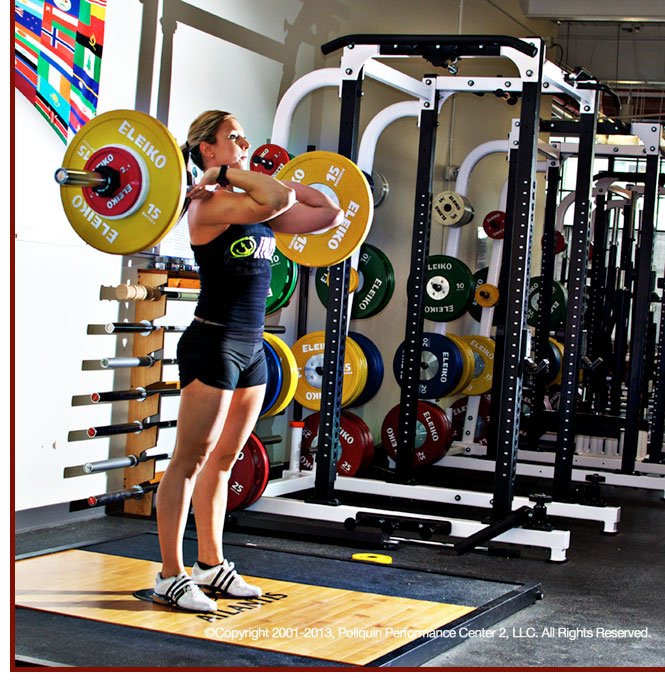
Starting Position Setup
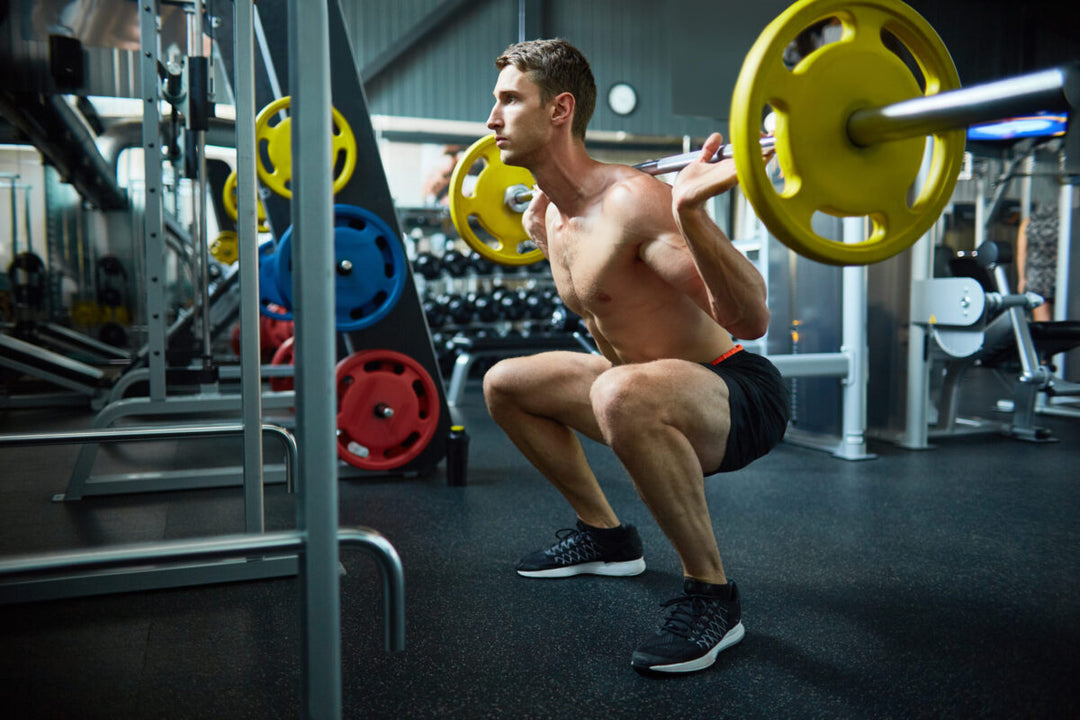
           • Stand facing away from a barbell placed on a squat rack.
           • Using your index fingers, set up a reference point on the bar (use the knurling to determine the width of the grip).
           • Keep your index fingers as close as possible to the outside of the shoulders.
           • Duck under the bar and place the bar on the thick area of the trapezius muscle.
           • Keep your chin up slightly.
           • Focus your eyes on the opposite wall at a point that’s slightly higher than your eyes in order to maintain proper neck alignment.
           • Keep your feet shoulder-width apart.
           • Take a big step directly forward with your nondominant leg to reach the initial starting position.

Descent
          • Move your front knee directly forward maximally before lowering your hips.
          • Lower the hips, keeping your back as erect as possible and your chest up.
          • Lower your body under control until your hamstrings come in contact with your calves.
         • Make a conscious effort to keep your elbows under the bar throughout the movement. This will ensure that the load is kept as close as possible over the center of gravity.
         • Make sure your knee travels forward and over your toes throughout the descent. 
         • Inhale through your mouth throughout the descent.

Ascent
         • First, raise the hips.
         • Keep your torso as perpendicular to the floor as possible throughout the ascent, particularly at the sticking point.
         • Exhale throughout the ascent.

Watch-Fors
        • Keep your trunk as erect as possible throughout the movement.

Safety Concerns
      • Keep the eccentric lowering under control.
      • Do not lean forward.
      • As heavy weights can be used and lateral stability is compromised, you should perform the exercise inside a power rack with the safety pins set at the appropriate height to catch the weight should you lose your balance. Of course, a spotter can also help you maintain control.

To change the resistance curve on this movement, you place the barbell on the clavicles using a front squat grip. You can also perform the exercise with dumbbells, or by holding a single-handle cable hooked to a low pulley using the contra-lateral hand.

Split squats are a versatile exercise that belongs in every athlete’s, strength coach, and fitness trainer’s exercise toolbox. And by the way, there are no female or male exercises.
 

Tags:

17 comment(s) so far...

Re: Tip 157: The Value of Split Squats

AWESOME posting- this is a "must read" for all my trainers and a great share e-mail to all my clients . ."Why we split squat so much . . "

Now if you could do a rant about women and breakfast ceral . .not just the grain but the soy, hidden sugars . .even the organic crap . .my two top "gripes" with clients will be covered.

Cheers for great stuff as always Charles
Mike

By Mike Demeter on   7/16/2010 8:59 AM

Re: Tip 157: The Value of Split Squats

Thanks for the great read, i will be following your blog for future updates. Thanks

By Liz Holman on   7/16/2010 9:08 AM

Re: Tip 157: The Value of Split Squats

Fantastic read as always Charles. Nice printable bullet points on technique to be taught correctly to maximize results.

By Jud Logan on   7/16/2010 9:14 AM

Re: Tip 157: The Value of Split Squats

Thanks for the article, Coach. I just started a 5 week cut today and I will definitely be using these during the periods when my lower back is still sore from a previous session.

Is there a preferred tempo, or is it simply down under control and up explosively? I'm trying to schedule these (and other rear-chain work) so that they do not inhibit performance of my hill-sprints, and vice-versa.

Again, thanks Coach!

By Twojay Dhillon on   7/16/2010 9:36 AM

Re: Tip 157: The Value of Split Squats

Coach


If I had read how to perform a lower body exercise the way that you describe it year ago I would not have the problem that I have right now with the squat. I tend forget how to do them and some days I do them fine the other days they look like good mornings, even thought in the past I use to squat 9 times a week!

I am going to use this great exercise help my squat.

This is why I need and want to take PICP level 2

Thanks a lot!

Jorge

By Jorge Garzafox on   7/16/2010 10:11 AM

Re: Tip 157: The Value of Split Squats

As always, thanks for the great read coach Poliquin. I think it's time to re-introduce them into my program. :)

By Krys S on   7/16/2010 10:18 AM

Re: Tip 157: The Value of Split Squats

Excellent article thanks for this one I will print it out and stick it up at work!

By Sefton on   7/16/2010 10:57 AM

Re: Tip 157: The Value of Split Squats

some clients will be visting the world of pain!!! great stuff amigo

By frank gorman on   7/16/2010 11:41 AM

Re: Tip 157: The Value of Split Squats

As a thrower, these are fantastic. However I was putting my back leg up on a bench- is that too high??? In the article it says 4" max???
Thanks

By Gene Flynn on   7/16/2010 3:36 PM

Re: Tip 157: The Value of Split Squats

Thanks for the tips.

With adequate knee and hip flexor flexibility would the high elevated split squat be safe? Mike Boyle seems very concerned with the low back hence his dropping of squats in favor of the Bulgarian Split.

By Andrew on   7/16/2010 3:54 PM

Re: Tip 157: The Value of Split Squats

Thanks for the valuable article Charles. You taught us that the knee must track over the toe so the hams touch the calf. Sometimes clients have come from trainers who have mis informed them that the knee must not pass the ankle. I have explained to the clients that the knee must be trained in a full range of motion and am aware that limited range training can cause adhesions.
What reading can I do to explain how the adhesions are caused from this limited ROM training.
Thanks

By Kyle Janks on   7/16/2010 4:30 PM

Re: Tip 157: The Value of Split Squats

Great post!
Thank you!

By Carlos Castro on   7/16/2010 7:08 PM

Re: Tip 157: The Value of Split Squats

Совет 157: Польза Приседаний на Одгой Ноге
Вопрос: По моим наблюдениям женщины постоянно включают в свои программы приседания на одной ноге, но мужчины практически никогд а не выполняют это упражнение. Неужели оно служит только для работы над ягодицами или оно также задействут квадрицепсы и мышцы задней поверхности бедра? Как вы относитесь к этому упражнению?
Ответ: На курсах PICP вы уделяем значительное внимание приседаниям на одной ноге, не только обсуждая их пользу, но и показываем студентам как правильно выполнять различные их вариации во время практической части класса,так как люди редко делают это упражнение правильно. Чтобы у нас не возникло недопонимания, я хочу объяснить разницу между приседанием на одной ноге и выпадом. При приседании вы стоите на одном месте в течение всего упражнения, а при выпадах вы двигаетесь вперед и назад, вверх и вниз, используя одну ногу.
Упражнения для одной конечности важны для достижения структурного баланса, что можно определить как баланс между разными мышечными группами. Это определение касается не только взаимосвязанных/противоположных мышц(например бицепс и трицепс), но и конечностей (т.е. правая и левая ноги). Вам недостаточно иметь необходимое соотношение между квадрицепсом и бицепсом (задней поверхностью) бедра, для достижения структурного баланса их длина на правой ноге должна быть равной с длиной на левой.
Структурные нарушения баланса часто встречаются у элитных спортсменов, особенно если они занимаются спортом, где нужно держать инструмент, например теннис, фехтование, сквош и пр. Такая несбалансированность значительно увеличивает риск травм, поэтому мои первоначальные тренировки обычно включают множество односторонних упражнений. У спортсмена появляется вероятность растяжения бицепса бедра, если эти мышцы на правой ноге сильнее чем на левой. Я также обнаружил, что при отведении начальной части тренировочной программы на одностронние упражнения человек быстрее улучшает приседании по сравнению с теми, кто не делал односторонних упражнений.
Приседания на одной ноге (также как и выпады) давно пользуются популярностью у женщин, потому что они преподносятся как упражнение для ягодиц. В ’90 х Freestyle, одна из популярных женских программ, рекламировала такие приседания как основное упражнение на ноги для женщин. Эта программа переросла в книгу (с продажами около 50 000 копий), DVD и сертифицированный курс. В ней даже изпользовались специальные приспособления, называемые «шесты для выпадов», фактически это были два шеста с общей базой для равновесия во время выполнения упражнений. Они не только гарантировали верную форму во время приседаниий, особенно для людей с нестабильностью в лодыжках или коленях, но и позволяли делать больше повторений , потому что руки помогали в движении. Один из крупнейших фитнес-клубов пробовал проводить классы с шестами для выпадов, но их идея не «прижилась». (Кстати, я видел набросок шестов для выпадов, опубликованный в книге по физической культуре в 1897 г., так что версия 1990 г. не была уникальной идеей.) Однако этот принцип не уходит из маркетингового списка фитнеса; когда публика казалось бы уже забыла о Freestyle и его шестах, на рынке появляется «Ноги за 3 Минуты» (3 Minute Legs™), глупое приспособление, осёдлав которое вы делаете приседания на одной ноге, и оно помогает вам. Невероятно.
Среди тяжелоатлетов приседания на одной ноге со штангой были пропагандированны в США Ангелом Спассовым в его лекциях в конце 80х. Он предпочитал приседание, где задняя нога находится на низкой платформе (около 10 см), позиция, позволяющая работать над квадрицепсами из-за большего веса , воздействующего на переднюю ногу. Спассов был уверен, что приседания замечательно подходили для спортсменов, и его молодые ученики делали эти упражнения для развития силы в ногах, необходимой для классических жимов и поднятий. Недавно один гуру финкциональных тренировок опять начал популяризировать приседания на одной ноге, но в них задняя нога помещается на платформу значительно выше, чем Спассов и я рекомендуем. Такое расположение заставляет нижние поясничные позвонки растягиваться до предела, что дает хиропракторам много новых клиентов.
Несмотря на вопрос о том какие мышцы выполняют работу, верно выполненные приседания дадут вам не только ноющие ягодичные мышцы, но и квадрицепсы, бицепсы бедра и приводящие мшцы ног. Я встречал множество спортсменов с уже хорошо развитыми ногами: спринтеры, прыгуны, бобслейдисты , кто добавлял несколько сантиметров мышечной массы в ногах, когда они начинали делать выпады или приседания на одной ноге.
Я также использую такие упражнения, когда поясница спортсмена еще не успела восстановиться послесерии приседаний или становой тяги. Они позволяют эффективно тренировать ноги, н перегружая при этом позвоночник. Я считаю, что приседания на одной нноге являются лучшим способом предотвращения растяжений паха в таких видах спорта как классический футбол или американский футбол.
Несмотря на количество подходов/повторений вы делаете, всегда начинайте с более слабой ноги, чтобы откоректировать мышечный дисбаланс быстрее.
Итак, далее идет описание того, как верно выполнять приседания на одной ноге:
Исходная позиция
• Поместите штангу за спиной на стойке для приседаний.
• Используя ваши указательные пальцы определите где будут находится ваши кисти (используйте насечки на штанге для определения ширины хвата).
• Держите указательные пальцы как можно ближе к наружной стороне плеч.
• Присядьте под штангу и поместите ее на самую широкую часть мышц трапецуса.
• Держите подбородок немного приподнятым.
• Сфокусируйтесь на противоположной стене на точке несколько выше уровня глаз, чтобы поддерживать коректное расположение шеи.
• Поставьте ноги на ширине плеч.
• Сделайте большой шаг вперед вашей слабой ногой для становления в исходнию позицию

Приседание
• Максимально выдвиньте колено вперед перед тем как начать снижать таз.
• Снизте таз, держа спину прямой и грдь приподнятой.
• Приседайте то того момента, когда задняя поверхность бедер прикоснется икр.
• На пртяжении всего упражнения держите локти под штангой. Это гарантирует, что нагрузка находится как можно ближе к центру гравитации.
• Убедитесь, что колени двигаются вперед и за пальцы на ногах во время приседания.
• На протяжении всего приседания вдыхайте через рот.

Подъем
• Сначала поднимите ваши бедра.
• Поддерживайте тело перпендикулярно полу в течение подъема, особенно в месте где вы обычно «застреваете».
• Выдыхайте на пртяжении подъема.

На что обратить внимание
• Поддерживайте туловище как можно более прямым на протяжении всего упражнения.
Безопасность
• Всегда контролируйте снижение
• Не наклоняйтесь вперед
• Так как вы можете использовать тяяжелый вес, вы теряете боковую стабильность, поэтому вам следует выполнять упражнение внутри силовой рамы со стопорными штифтами, закрепленными наподходящей высоте чтобы «поймать» штангу если вы потеряете баланс. Безусловно партнер также может помочь вам удерживать контроль.

Чтобы изменить сопротивление в этом упражнении, поместите штангу на ключицы, используя хват как в обычных приседаниях. Вы также можете пользоваться гантелями или кабелем, находящемся в руке противоположной работающей ноге (кабель закреплен в нижнем положении блока).
Приседания на одной ноге - универсальное упражнение для каждого атлета, силового и фитнес тренеров. Кстати, еще не существует исключительно женских или мужских упражнений.

By Anna Kondrat on   7/16/2010 8:48 PM

Re: Tip 157: The Value of Split Squats

Great Article! Split squats got rid of my patellar tendonitis in 3 weeks. I've also noticed a big improvement in mobility since incorporating them more regularly.

By Jason on   7/17/2010 4:19 PM

Re: Tip 157: The Value of Split Squats

Thanks Charles, I love split squats and use all variations regularly in my own training and with my clients. I now have a great article to show them when they are rolling their eyebals and moaning at me ha ha. However I don't recommen BB split squats with broken toes, fun times !!
On a more serious note, I have noticed a big improvement in my leg srength and flexibility since incorporating these into my workouts, they are a fantastic exercise with so many benefits. I highly recommend your PICP level 2 to any students who havent yet done it, it completely changed the way I train myself and my clients and where I learn't the value of split squats. Thanks again Tracey :-)

By Tracey on   7/17/2010 8:46 PM

Re: Tip 157: The Value of Split Squats

hey charles
i just competed my personal training course and all through that they where teaching us to do it the way where when your in the decent when ur at the bottom of the movement your knees should be at 90 degrees n i always see people at the gym doing this aswell and it wasnt till i got a mentor and he told me to do it the way that u hav just explained and it defiantly makes sense. i guess my question is that how come so many people are teaching it the 90 degrees way?

thanks
nathan

By Nathan Nicholson on   7/19/2010 9:58 AM

Re: Tip 157: The Value of Split Squats

good article

By smitty on   7/27/2010 3:48 PM

Your name:
Your email:
(Optional) Email used only to show Gravatar.
Your website:
Title:
Comment:
Add Comment   Cancel 
Follow us on Twitter Follow us on Facebook Follow us on YouTube