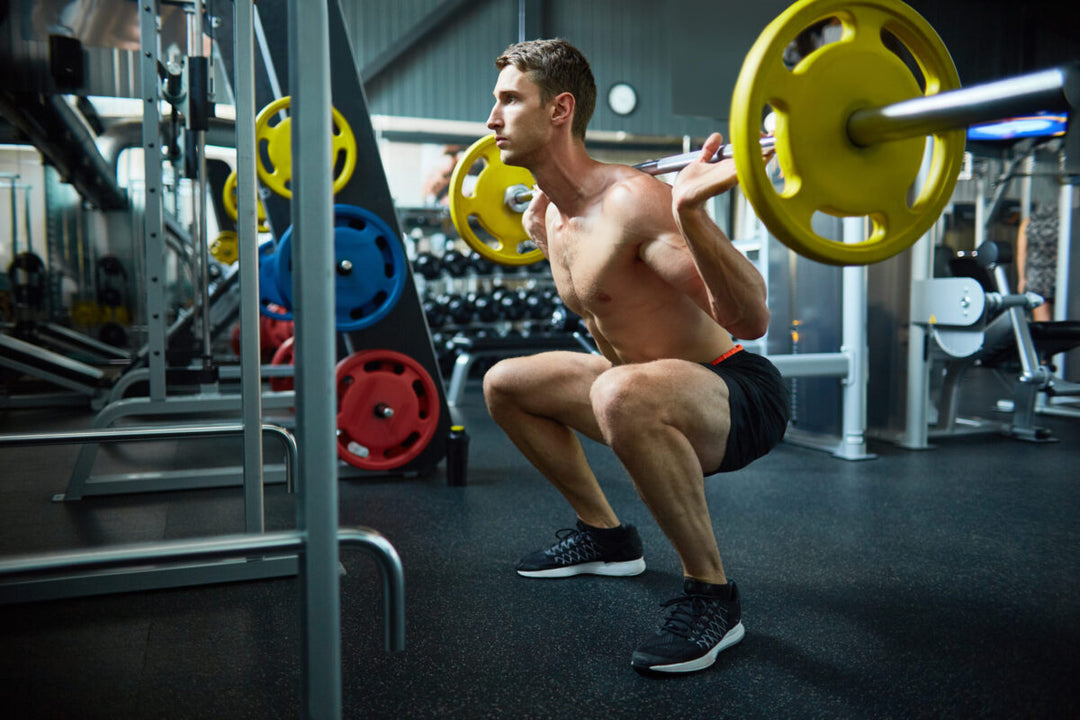
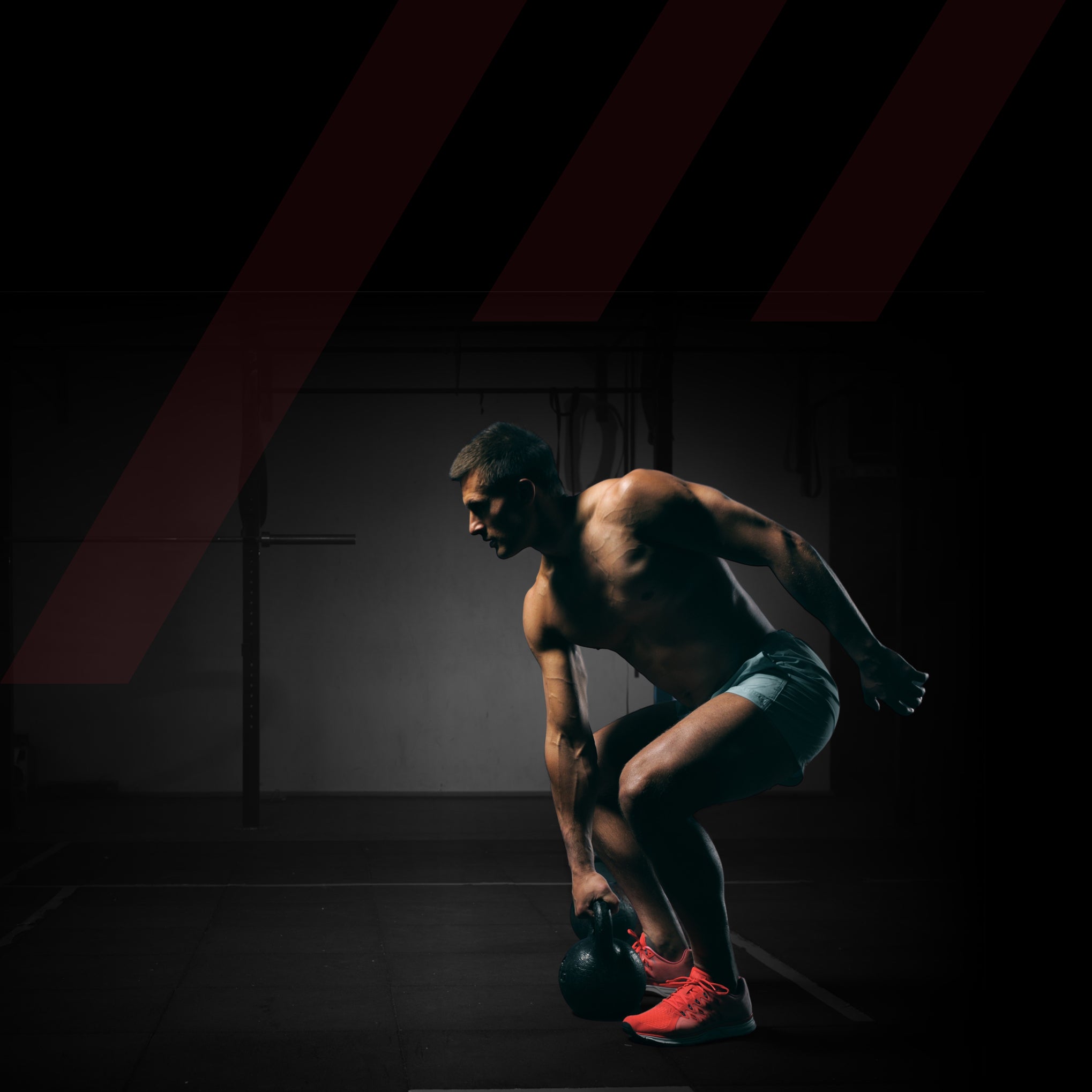




The squat is one of the best exercises for improving athletic performance and developing functional strength in the general population. It can train you to jump higher and run faster. It should be part of any hypertrophy or fat loss program because it trains so much muscle mass at once, however, it can also lead to injury if you are not structurally balanced.
Chances are that if you don’t train for structural balance, you have some faulty movement patterns that can put you at risk of dysfunction and compromise performance. For instance, a recent study showed that 71 percent of college club sport athletes who had at least 5 years of serious weight training experience were structurally imbalanced and had faulty movement in the back squat.
This study tested athletes during quiet standing to identify lack of symmetry in the body. It’s normal and extremely common to develop a “habit” of favoring one side of the body and it is almost always the dominant-handed side. Athletes with a degree of standing asymmetry of greater than 6 percent were put into the “unequal” group and those with less than 6 percent unequal weight distribution went into the “equal” group.
A movement analysis during a 75 percent of the 1RM back squat showed that those in the “unequal” group had much more asymmetry than those in the “equal” group, meaning that the unevenness the athletes’ displayed when standing without weight significantly affected their movement in the squat. This led to an uneven vertical ground reaction force and excessive bar displacement, or horizontal movement, during the squat.
The findings are important because it shows bilateral symmetry can’t be assumed with experienced lifters. A structural balance assessment MUST be done for every athlete and trainee to straighten out faulty movements and structural imbalances. Training bilateral exercises without fixing these issues will only make them worse and will put trainees at risk of injury during weight training and daily life. Finally, it will compromise maximal strength development since uneven trainees can’t generate as much force as if they were bilaterally even.
Solve lack of symmetry with the following strategies:
• Do a structural balance assessment for the muscles in the lower body and to identify range-of-motion (ROM) issues in the ankle and hip joints.
• Perform single-side training such as split squats and step-ups to achieve greater structural balance before training a regular squat.
• Perform stretching, soft tissue work, and mobility exercises in joints with limited ROM.
• Ensure that all the muscles on both sides of the body are firing. For example, if the tibialis anterior—the antagonist muscle to the calf complex—is not firing, it may compromise ankle joint flexibility leading to poor movement in the squat. The glute muscles are another muscle that is often found to be firing inadequately.
• Don’t rely solely on the Functional Movement Screen (FMS) to asses asymmetry. One recent study show it lacks relevance to athletic populations. A second study found that the FMS was not effective for characterizing meaningful changes in movement quality in trainees, rendering it ineffective for assessing structural balance.
Reference
Marcum, E., Bell, D., et al. Effect of Limiting Ankle-Dorsiflexion Range of Motion on Lower Extremity Kinematics and Muscle-Activation Patterns During a Squat. Journal of Sport Rehabilitation. 2012. 21(2), 144-150.
Copyright ©2013