



Blog

Poliquin Live

The Kettlebell Decision

Sep 27


9/27/2011 12:20 PM  RssIcon

by Charles Poliquin

In the field of personal training and physical fitness, trainers are always looking out for the latest exercise device – in fact, one of the most popular sections in any fitness magazine is the new products section. And certainly one type of exercise equipment that has become a hit in recent years, especially among those who promote the “boot camp” type of training, is the kettlebell.
 
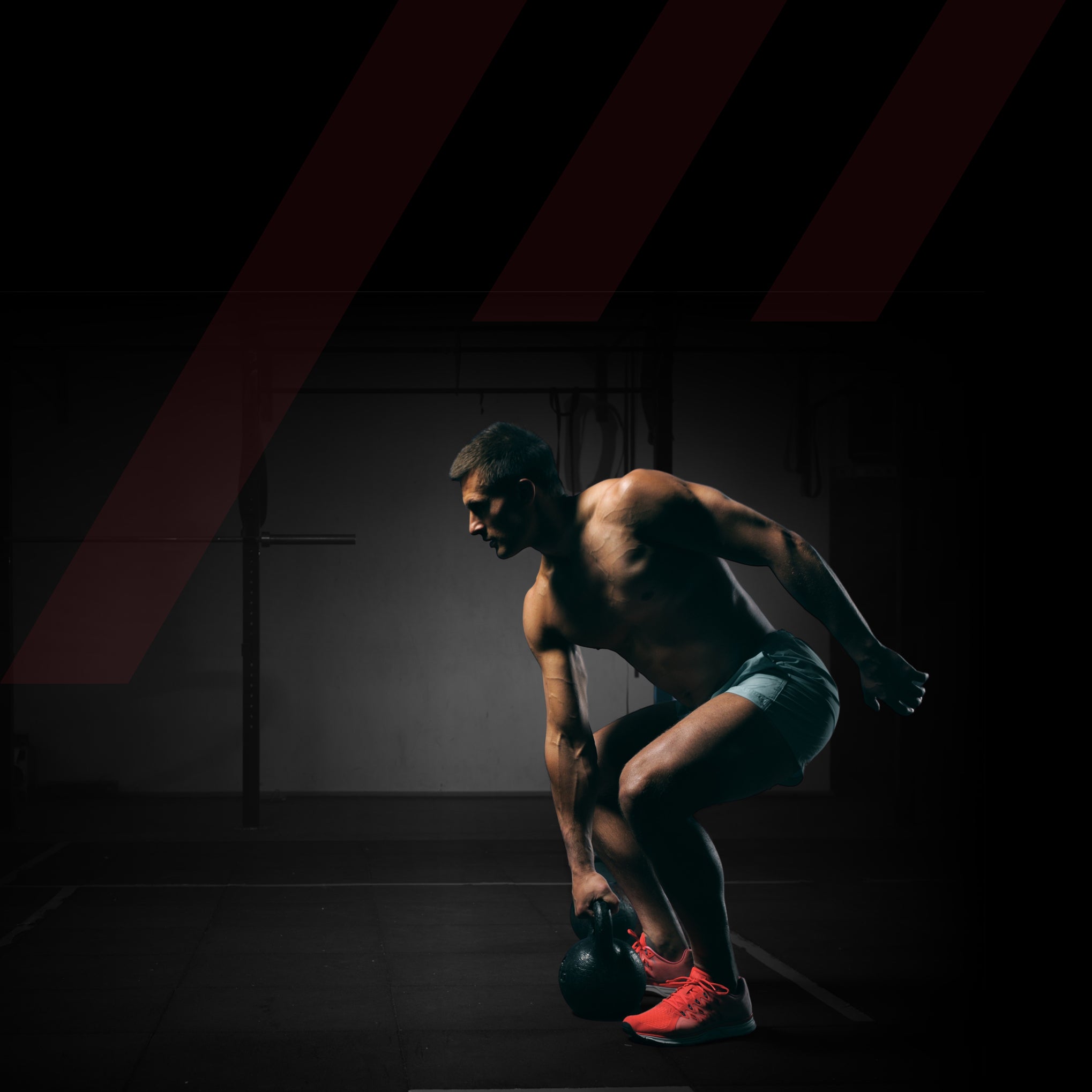
Unlike a conventional dumbbell, which has weight plates on each end of a single handle, a kettlebell has a U-shaped handle attached to a single round weight that looks like an old-style cannonball. The thick handle (usually thicker than on
standard dumbbells) is necessary to ensure the handle will not come off the weight.
 
One advantage of having the handle positioned farther from the center of mass than it is on a dumbbell is that it makes it easier to perform swinging exercises. In one of the most popular types of kettlebell exercises, trainees swing the weight between their legs, providing a dynamic stretch for the lower back and hamstrings. I must say, however, that I would not recommend many of these types of exercises to untrained individuals or those with a history of back pain, as they may place excessive stretch on the ligaments of the lower back.
 
Another advantage of the handle position is that it allows you to perform release movements more easily and safely. These exercises involve releasing the handle at the completion of a repetition – often even catching the weight after it has been thrown. These types of exercises are popular with throwers in track and field. Obviously these are exercises that are usually performed outside on grass or other relatively soft surfaces, as throwing weights indoors is a practice that gym owners tend to discourage.
 
Before going any further, let’s look at the origin of kettlebells.
 
The Russian word for kettlebell is girya, and an early description of a kettlebell can be found in a Russian dictionary published in 1704. However, kettlebells at this time were used in markets as counterweights, not exercise equipment. Eventually they began to be used for exercise, becoming extremely popular with track and field athletes and the military. Some weightlifters were known to use kettlebells as part of their general conditioning. Vasily Alexeyev, the first man to clean and jerk 500 pounds, was known to use kettlebells in his training.
 
The first kettlebell competition in Russia was believed to have taken place in 1948, leading the way for a national championship in 1985 called the USSR National Girevoy Sport Championship. The lifts were the one-arm power snatch and the clean and jerk, performed for repetitions. Depending upon an athlete’s classification, the specific weights (called poods) were 35, 52 and 70 pounds (or 16, 24 and 32 kilos). Competition was one way athletes could earn recognition in girevoy sport, but they could also move up on a girevoy ranking system by performing a specific number of repetitions with a pood.
 
One frequently cited testament to the value of kettlebell training is a study performed in 1983 that involved two groups of subjects training to improve results in the following tests: pull-ups, standing broad jump, 100-meter sprint and the 1k run. The first group practiced these tests and performed a conventional physical fitness workout; the second group did a workout using only kettlebell exercises. Interestingly, at the end of the training cycle the group performing only the kettlebell exercises performed better than the group using the conventional workout and practicing the tests!
 
It would have been interesting if the study had had a third group that used dumbbells rather than kettlebells. I say this because pretty much any exercise that can be performed with a kettlebell can also be performed with a dumbbell. And due to space limitations and budget restrictions, few gyms can afford to have a complete line of both dumbbells and kettlebells.

The Poliquin Kettlebell made by Watson Gym Equipment out of the UK features rotating handles.The issue I have with the way most kettlebells are designed is that the handles don’t rotate, and this rigidity places considerable stress on the elbows and wrists. Likewise, one reason that it took so long for thick-handled barbell and dumbbell training to catch on was because the early versions of this equipment did not have handles that rotate, which increased the risk of injury. A colleague of mine who worked for an exercise equipment manufacturer said that they had considered making thick-handled barbells more than a decade earlier, but that there simply wasn’t enough demand for them to keep in their inventory. Also, he said the costs associated with tooling rotating thick bars would make them expensive and out of the price range of their target market, which was mainly high schools and recreational centers.

Kettlebells cost more than equivalent weights in dumbbells, but recent demand for these products has been steadily bringing the price down – that and the fact that many of them are manufactured in the US rather than Siberia. However, the problem with the nonrotating handles still exists.
 
One compromise is an adjustable U-shaped kettlebell (in that the center of mass is away from the handle as with a standard kettlebell) that has a revolving handle. I worked with Watson Gym Equipment in the United Kingdom to design such a product, which is called the Poliquin Kettlebell. It has a 2-inch-thick ultra smooth revolving handle, and because it’s adjustable, your financial investment in kettlebell training is considerably less. You can find out more about this product in the Watson website: http://www.gymequipment.uk.com in the section called “Special Bars.”

One of the features of kettlebells that I like is that they offer a different resistance curve than dumbbells, which helps vary the training stimulus.
 
Considering that kettlebells are here to stay, try them out. Used wisely, they are an effective way to add variety to any type of training program.


Copyright ©2011


< Back to Blog
Tags:

Your name:
Gravatar Preview
Your email:
Your website:
Title:
Comment:
Security Code
Enter the code shown above in the box below
Add Comment   Cancel 
Join Our Email List Follow us on Twitter Follow us on Facebook Follow us on YouTube