




Tip 166: Prevent Knee Pain or Injury with Single Leg Training
9/7/2011 12:17 PM
Perform single leg training to strengthen muscles around the hip and knee and prevent knee pain or injury. Whether you suffer from occasional or chronic knee pain or are a competitive athlete who needs to prevent injury, a new study highlights exercises for promoting structural knee balance.
Knee dysfunction is often due to a weakness of one of the quadriceps muscles, which often leads to other limitations in the hip musculature. Research indicates single leg step downs, step ups, squats, and hops, combined with exercises to improve pelvic stability and hip strength are effective at preventing pain and decreasing injury risk.
A Brazilian study had recreational athletes perform an eight-week training program that resulted in significant improvements in lower limb movement mechanics and better scores on three lower leg strength and power tests. For those of you who are interested in the kinetics of lower limb weakness, researchers are concerned with excessive hip adduction and knee abduction that places lateral pressure on the patellofemoral joint. Excessive hip medial rotation over the tibia causes lateral pressure on the knee joint (on the facet to be specific) and the patella is forced against the lateral femoral condyle, a bony projection of the knee bone. It is these faulty mechanics that commonly lead to knee pain and injury in the form of ACL ligament tears.
The training program resulted in improvements on single leg hop distance and a timed single leg hop test of about 12 percent. Eccentric knee and hip muscle torques were significantly greater after the training program as well. Researchers suggest the improvements in the hip allow trainees to maintain the pelvis level, not anteriorally rotated, while simultaneously controlling knee stabilization, effectively reducing overload on the knee joint.
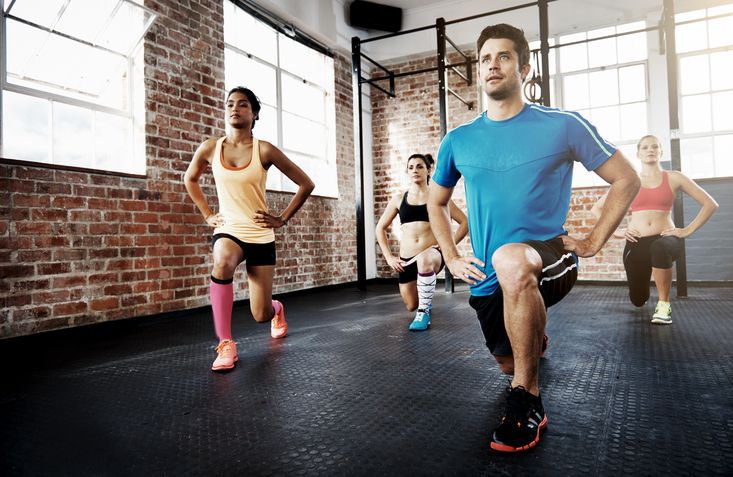
Researchers stress the importance of exercise progressions for individuals who are already experiencing knee pain, or those with more radical structural imbalances. For example, a split squat would be a beginning exercise followed by single leg step up and step down with a four second tempo, and then onto single leg squats and plyometrics. Once base levels of strength and mobility are established, regular squats and Olympic lifts are ideal for maximal motor unit recruitment.
Reference:
Nakagawa, T., Muniz, T., Baldon, M., Dias, C., Reiff, R., Serrao, F. The Effect of Additional Strengthening of Hip Abductor and Lateral Rotator Muscles in Patellofemoral Pain Syndrome: A Randomized Controlled Pilot Study. Clinical Rehabilitation. December 2008. 22(12), 1051-1060.
Saleh, K., Lee, L., Gandhi, R., Ingersoll, C., Mahomed, N., Sheibani, S., Novicoff, W. Quadriceps Strength in Relation to Total Knee Arthoplasty Outcomes. Instructional Course Lectures. 2010. 59, 119-130.
Baldon, R., Lobato, D., Carvalho, L., Wun, P., Santiago, P., Serrao, F. Effect of Functional Stabilization Training on Lower Limb Biomechanics in Women. Medicine and Science in Sports and Exercise. June 2011. Published Ahead of Print.
Copyright ©2011
1 comment(s) so far...
Re: Tip 166: Prevent Knee Pain or Injury with Single Leg Training
Is it single leg squats and single leg hops, or just regular squats and hops? Thanks
By Jesper Ellegård on
9/7/2011 2:59 PM
|