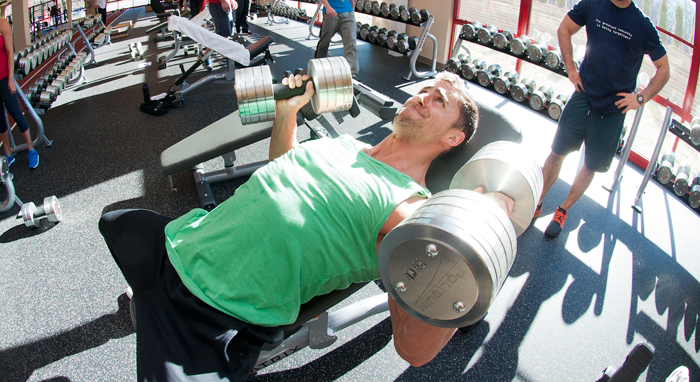




Are you trying to get stronger, more powerful, or put on muscle, but aren’t getting satisfying results? When was the last time you increased your weights, did more chin-ups, or saw a positive change in your body composition? If you can’t provide specific answers to each question, you may want to shake up your training so as to get something out of your hard work. Here are a few tips to do so.
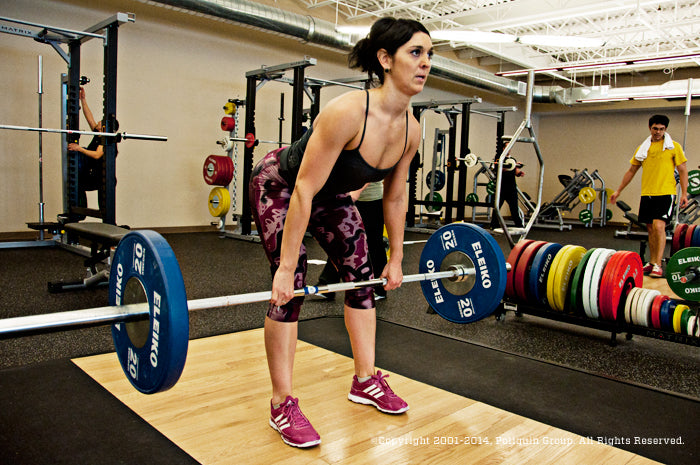
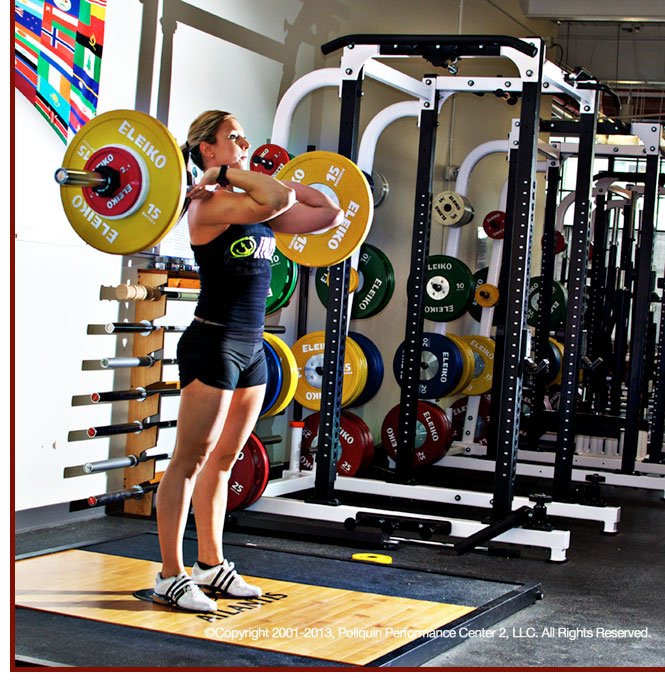
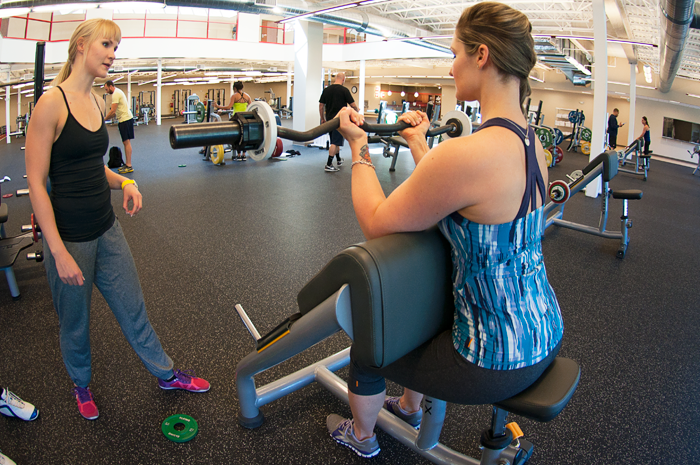
First, you need to perfect training technique. Training technique is not trivial! Rather, it is a fundamental skill that will allow you to achieve success in the gym, just as fundamental skills like dribbling or footwork will give you success on a basketball court. For example, elite weight lifters spend so much time perfecting their lifting technique on the basic exercises such as the squat and overhead press because it will allow them to get stronger, and that strength will have carryover to the Olympic lifts.
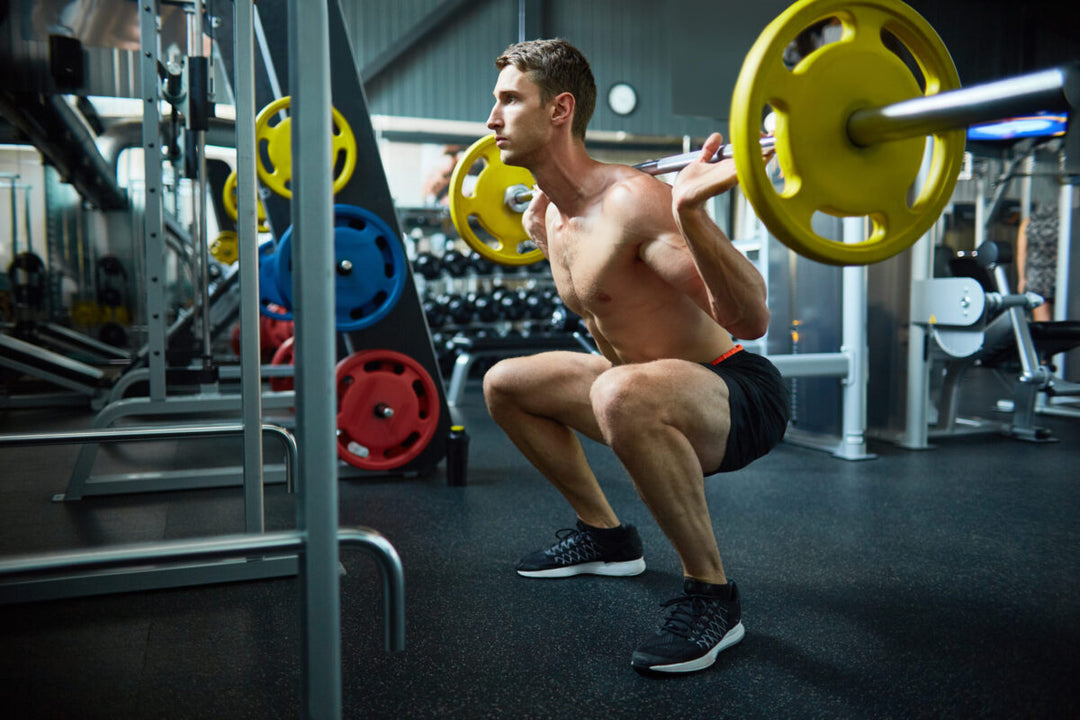
Training technique includes knowing the basic mechanics of a lift—if you are doing a full squat you know you need to go all the way down until the hamstring covers the calf, but not to the point where your pelvis caves under, and you must keep your back tight, chest up and open, and knees tracking over the toes.
Second, you need understand that training to “technical failure” is a very effective strategy for gain muscle and strength. It does not mean continuing to lift until you are physically unable to perform another repetition. Rather, you lift until you are unable to maintain the correct pathway of the bar or dumbbell for every repetition. Once you can now longer lift the weight with proper technique, you should end the set or decrease the weight, depending on the type of training program you are doing.
Third, doing more sets will help you build strength faster than doing fewer sets, especially over the short term. For example, an elegant study that compared the effect of 1, 4, and 8 sets of heavy squats in trained men showed the superiority of doing a lot of sets if you want to get strong. The participants trained twice a week doing either 1, 4, or 8 sets of squats to failure with a load of 80 percent of the 1 RM. Workouts included upper body lifts to more closely mimic a real-life training protocol.
Results showed that the 8-set group gained the most strength in the squat by the end of the study, improving their 1RM by a huge 37 kg. They also got strong fast, increasing squat 1RM performance by 18.5 kg after only 3 weeks! Compared to the 8-set group that saw an average squat 1RM increase from 162 kg to 199 kg, the 1-set group increased squat 1RM by 17.5 kg, and the 4-set group increased squat 1RM by 23.8 kg by the end of the study.
The take away is that if you are serious about training, regardless of if your goal is strength, power, or body composition, you HAVE to do more than one set. Multi-set training is ALWAYS superior, and really, a much larger volume—as in more than 4 sets—will produce better results than a smaller volume of less than 4 sets. Pay attention here, because the vast majority of recreational gym goers are maybe doing 3 sets, but very few even do that many. Increase your sets and you will get better results.
Fourth, consider changing your rep/set/load scheme. Just as the vast majority of recreational trainees use 2 or 3 sets, they often stick to 10 reps per set. We know that if your goal is to get stronger, you will be much better served by doing a training cycle with fewer reps (try 5 or 6), but more sets (try 6 to 8), with a heavy load. If your goal is to build muscle, consider increasing your weights by 5 or 10 percent, but do 8 reps for 4 to 8 sets.
Finally, if you are training for a sport, you will want to include explosive training cycles in your program. Read the article
Vary Tempo to Gain Muscle & Lose Fat: Count Tempo to Get Results for an example of an explosive training program for increasing power output.
Reference
Marshall, P., McEwen, M., et al. Strength and Neuromuscular Adaptation Following One, Four, and Eight Sets of High-Intensity Resistance Exercise in Trained Males. European Journal of Applied Physiology. November 2011. 111, 3007-3016.