Blog

Poliquin Live

Tip 469: Manipulate Training Intensity & Volume to Lose Fat and Get Stronger

Friday, November 02, 2012 6:06 AM
Manipulate training intensity and volume to lose fat and get stronger. Altering program variables such as time under tension, rest periods, intensity, and overall volume can help you break through fat loss plateaus or reach new personal records.

 It’s generally accepted that resistance training can help you burn fat because it produces a significant excess post oxygen consumption (EPOC), which is an elevation in energy expenditure for as much as 48 hours after training. There’s a lot of research to support EPOC, however, not all intensities or volumes are equal when it comes to post-workout calorie burn.

In fact, a recent study using trained men found no significant increase in EPOC from two intense training protocols, highlighting the need for you to be smart about manipulating training variables if fat loss is the goal. It also reinforces the need for a short and long-term workout plan if you want to gain strength and reach your goals.

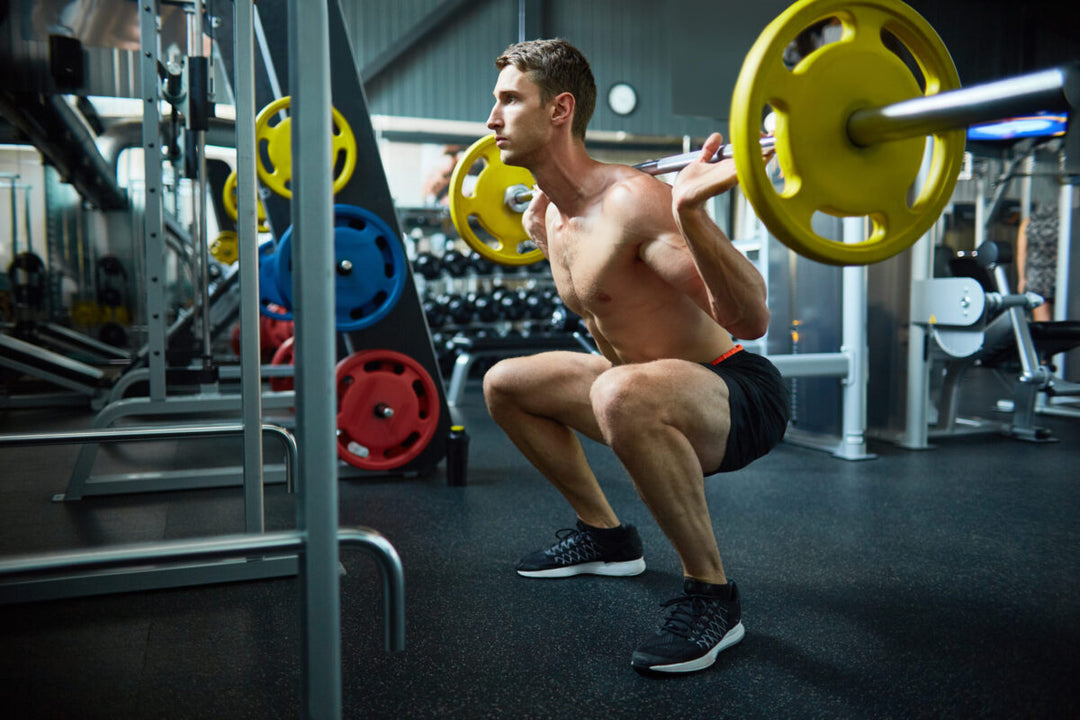
This training protocols used a bench press, squat, bent-over row, and Romanian deadlift with an intensity of 85 percent of the 1RM for 6 to 8 reps per set. Researchers compared EPOC in the 48 hours after training based on a smaller volume in which participants lifted 10,000 kg or a larger volume in which they lifted 20,000 kg.

Surprisingly, neither protocol elevated EPOC at any time during the 48 hours post-workout. During the 10,000 kg trial, trainees burned an average of 247 calories, whereas during the 20,000 they burned an average of 484 calories. Fat burning was a tiny bit higher after the 20,000 trial, but this was not significant.

The research group thinks the lack of an increase in post-workout energy burn is due to the fact that there is a volume and/or intensity threshold that must be reached to increase EPOC, which is training status dependent. For example, previous studies have shown increases in EPOC, but they used greater volume:
•    A protocol with an intensity of 70 percent of the 1 RM with 60 total sets equaling 600 reps lifted for a load-volume of 38,000 kg.
•    Using the same intensity, another study used a protocol of 50 total sets equaling 500 reps lifted for a load-volume of 25,000 kg.
•    In comparison, the present study used significantly fewer reps (199) to reach the 20,000 kg trial. If 400 reps had been tested, the trainees would have neared 50,000 kg. This may have been the threshold needed to elevate EPOC.

Other options that have produced a boost in EPOC in trained individuals include eccentric-enhanced training, which causes significant muscle damage. EPOC is known to be significantly elevated during muscle protein repair.

Manipulating time under tension, or the tempo of each phase of a lift, can also influence EPOC. For example, a recent study of trained men compared the following lifting cadences in the bench press: 1.5 seconds up and down, 4 seconds down and 1 second up, or 1 second down and 4 seconds up. Results showed that the 1.5-second tempo, which took a total of 15 seconds per set, required the least energy expenditure and EPOC was significantly lower than with the other two tempos that each took 25 seconds per set. This is not surprising since the participants spent more time under the weight, but it reminds us that a simple way to burn more energy during and after working out is to mix up tempo.

Take away two points: First, if you are not getting results, there is some error in your programming—and it may be as simple as not working hard enough. Second, you have to be creative with your training, but it MUST be based on the principles of physiology to get the best results. Program smart and work hard, and you will get better results. For more on manipulating time under tension to achieve specific results, read Top Five Reasons to Vary Tempo in Your Workout.
 
References
Abboud, G., et al. Effects of Load-Volume on EPOC after Acute Bouts of Resistance training in Resistance trained Males. Journal of strength and Conditioning Research. October 2012. Published Ahead of Print.
 

Copyright ©2012

Join Our Email List Follow us on Twitter Follow us on Facebook Follow us on YouTube Follow us on Flickr Follow us on Instagram