



Increase your vertical jump and improve sports performance with a lower body strength program. A new study in the journal Human Movement Science reminds us that increasing strength is a reliable way to improve sports performance. A major error that many athletes make is to do the wrong mode of training for their sport. For example, a hockey, basketball, or soccer player who does endurance running will only compromise their strength, power, and muscle mass, while increasing their injury risk. Don’t let this happen to you!
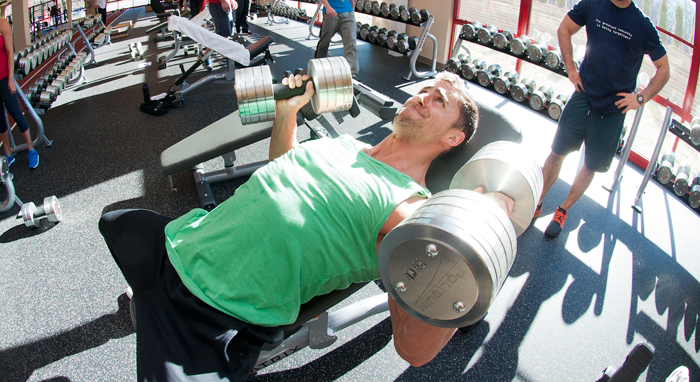
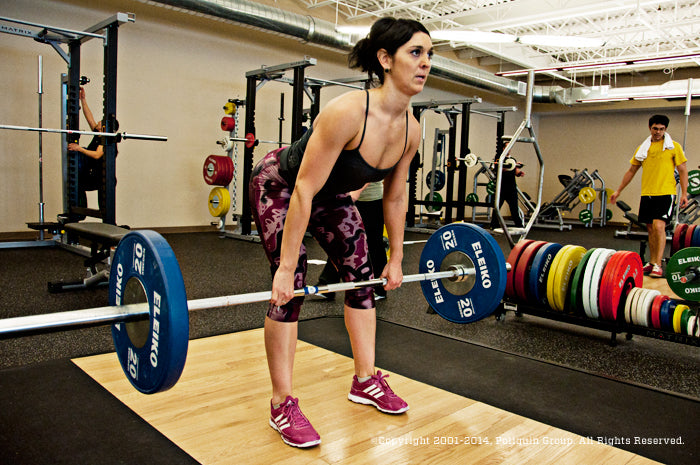
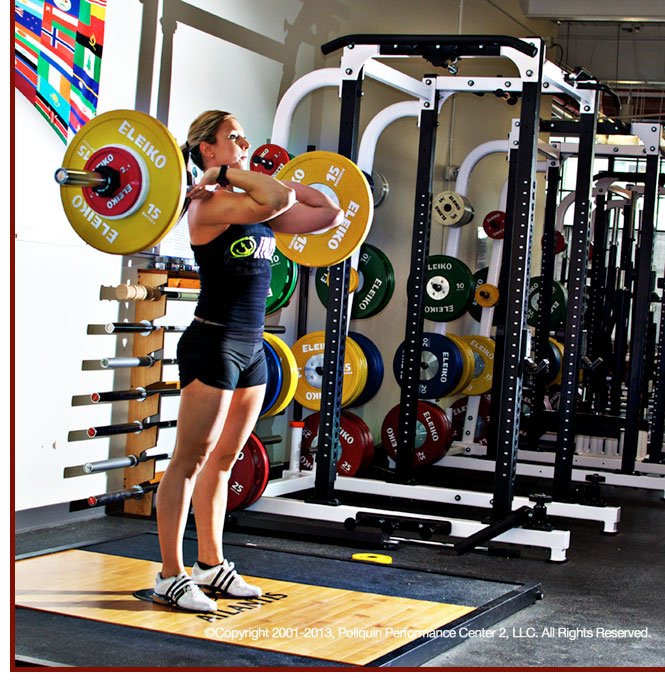
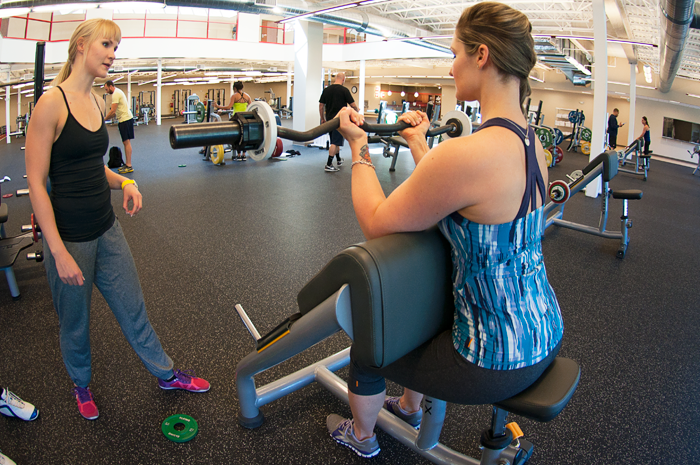
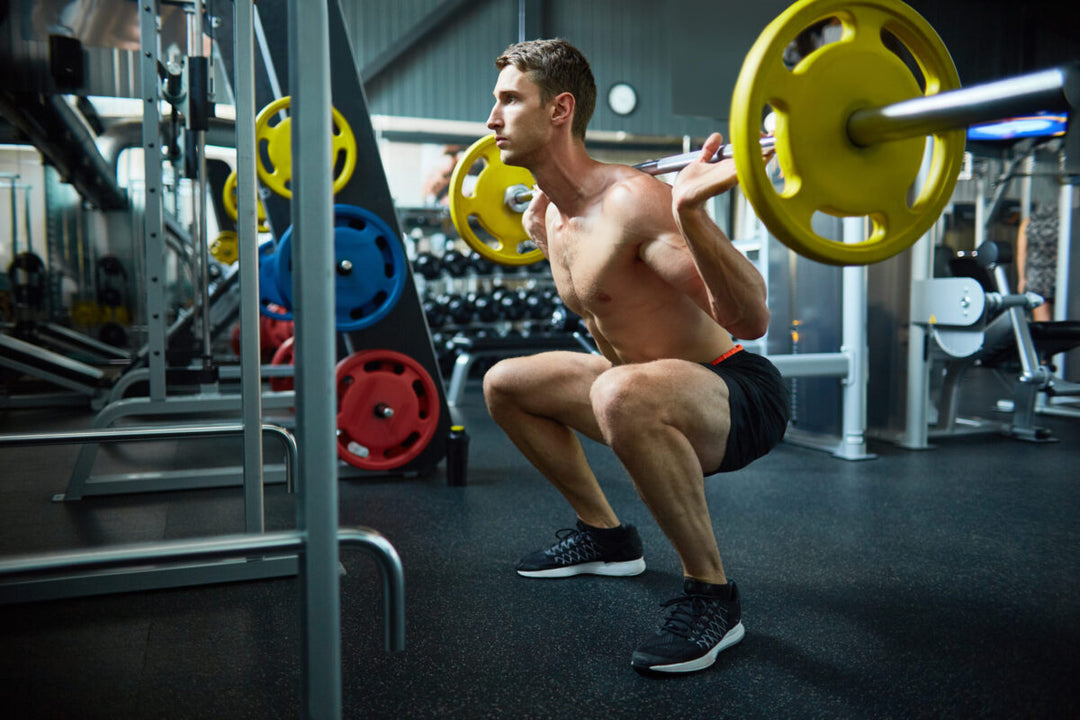
The new study compared the effect of 12 weeks of heavy strength training with recreational soccer training, high-intensity interval running, and continuous aerobic running on jump height and muscle fiber growth in a group of young athletes. The strength protocol trained the squat, hack squat, lunges, incline leg press, knee extension, hamstring curls, and calf ranges using 75 to 85 percent of the 1RM.
Results showed that the strength training program was the only training method to significantly increase vertical jump height—participants jumped 17 percent higher in the countermovement jump. Strength training also produced an average growth of 34 percent in muscle fiber cross sectional area (CSA) in the quadriceps, with the greatest increase in size coming from the type IIA fibers (33 percent increase versus 23 percent increase in the type I fibers). The soccer training group also increased muscle fiber CSA by 12 percent, most of which occurred in the type I fibers, with the percentage of type IIX fibers decreasing by 35 percent.
Although soccer has an aerobic component, this would be an unfavorable fiber shift because power and speed are essential to excel on the soccer field. Strength training produces more favorable muscle fiber growth because, aside from distance runners, athletes want to have a greater percentage of type II fibers to produce more strength and power. For example, the group that strength trained not only increased their vertical, but they enhanced neuromuscular activity with faster, more explosive stretch-shortening cycle performance. Simply, the trainees were able to generate more force and power more quickly.
The competitive implications of faster, more powerful athletes applies to all field and court sports in which acceleration, change of direction, jumping, blocking, or stabilizing are necessary. Being strong and mobile can help athletes avoid injury as well because, if trained properly, strength training will ensure structural balance throughout a sports season.
This study is timely in light of a number of recent studies that have shown alternative training methods to be much less effective for boosting performance variables like jump height and speed. Strict plyometrics, power training, sprint training, or especially aerobic running are ineffective if done without additional strength training.
Take away the understanding that all athletes will benefit from strength training. High-intensity conditioning is the only kind that should be done by strength and power athletes. The specific programming parameters of conditioning should mimic the demands of the sport. For the general public, best strength, conditioning, and body composition results will come from doing strength training and high-intensity intervals.
Reference
Jakobsen, M., Sundstrup, E., et al. The Effect of Strength Training, Recreational Soccer and Running Exercise in Stretch-Shortening Cycle Muscle Performance During Countermovement Jumping. Human Movement Science. 2012. Published Ahead of Print.
Copyright ©2012