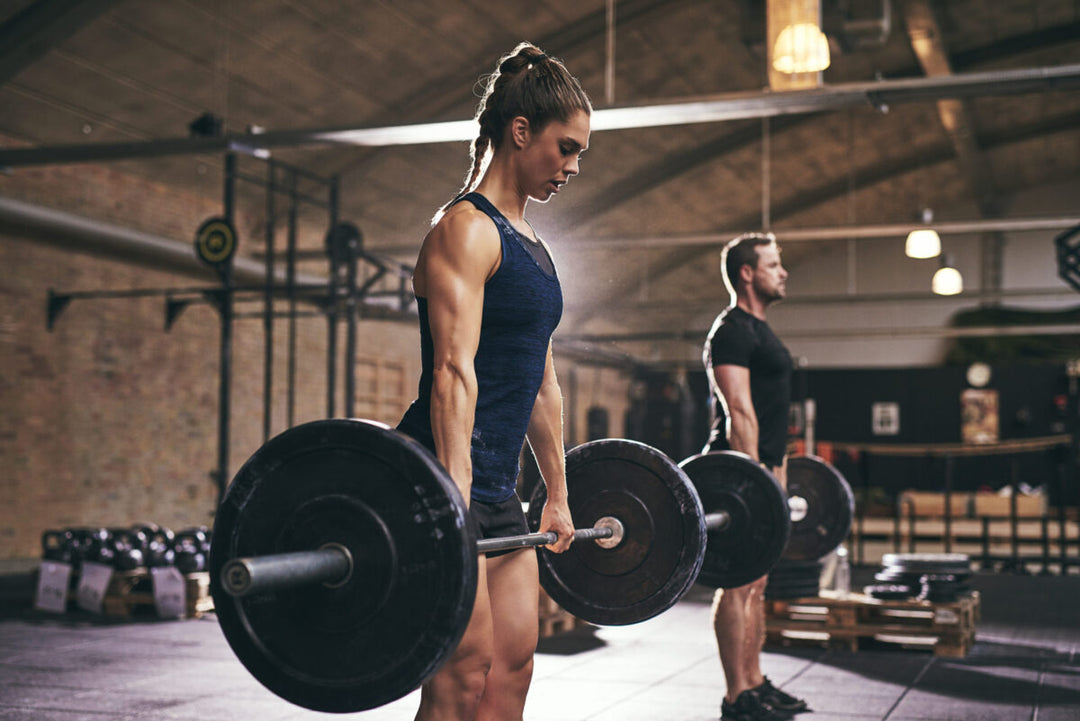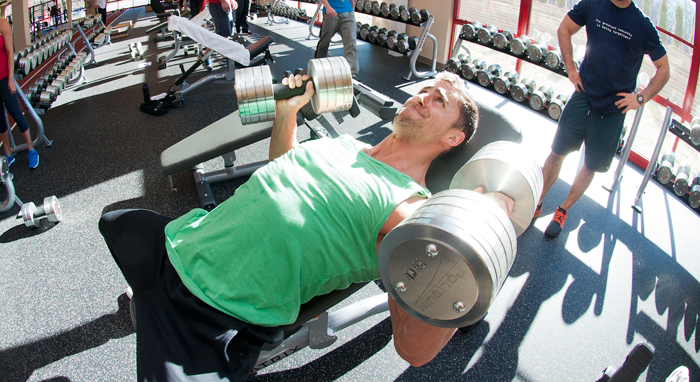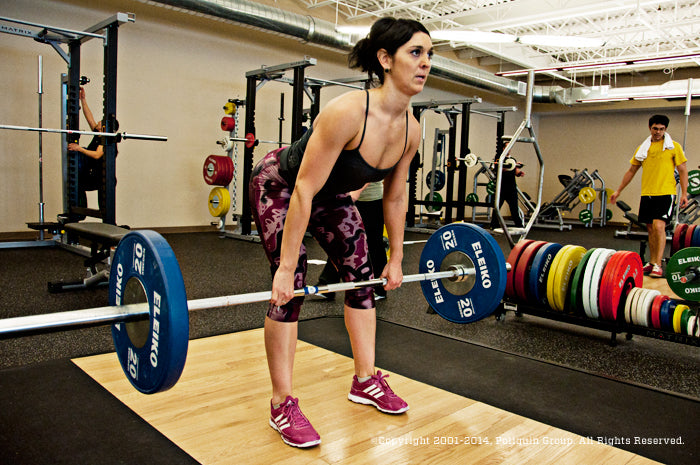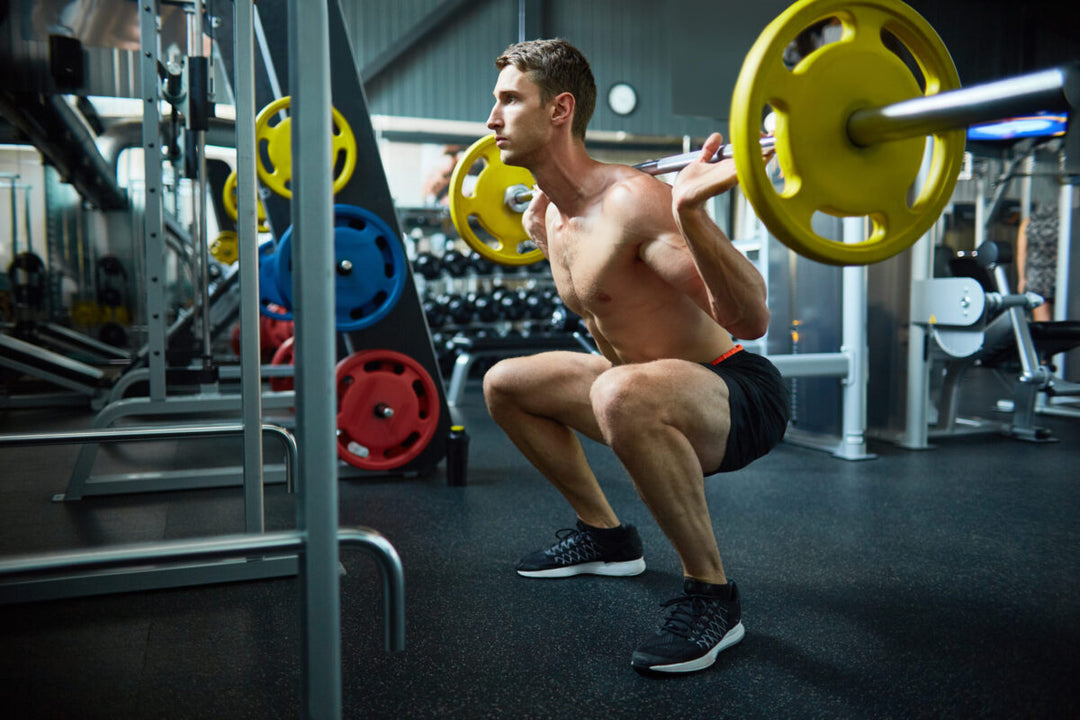




Increase your squat strength and power by training with free weights rather than relying on the Smith Machine. It’s no surprise to most of the readership, but a couple of new studies reinforce the value of using free weights to make up the core of your strength and power training program, whether in the squat or bench press.
A study in the Journal of Strength and Conditioning Research measured lower limb muscular activity in the free barbell back squat and the Smith machine squat and found that the biceps femoris and gastrocnemius activity were increased between 26 and 49 percent during the free weight squat. The increased leg muscular activity in the hamstring and calf was due to the muscles’ role in stabilizing and supporting the ankle, knee, and hip joints in the unstable environment of the free barbell squat. In addition, the vastus medialis and lateralis muscles of the quad were more active during the free barbell squat than the Smith machine squat, whereas activation of the trunk stabilizers was similar between the exercises.
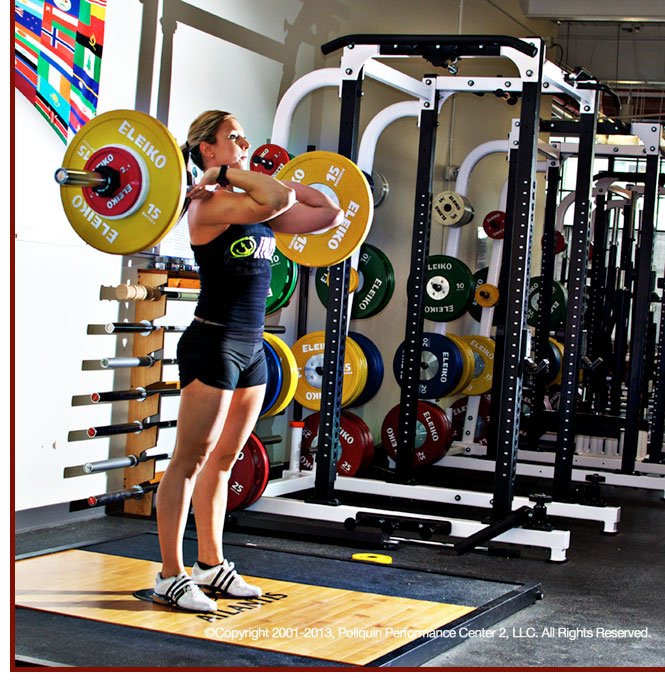
The free barbell squat should be a staple of your training program, and it’s possible to further manipulate muscle recruitment by training the front versus back squat or altering foot width. For example, electromyographic data suggest that the front squat is more effective than the back squat for activating the vastus lateralis and the rectus femoris of the quads, while placing less compressive forces on the knees. A very wide foot width—similar to powerlifting squat or sumo squat—has been found to recruit the glutes more than a narrower stance.
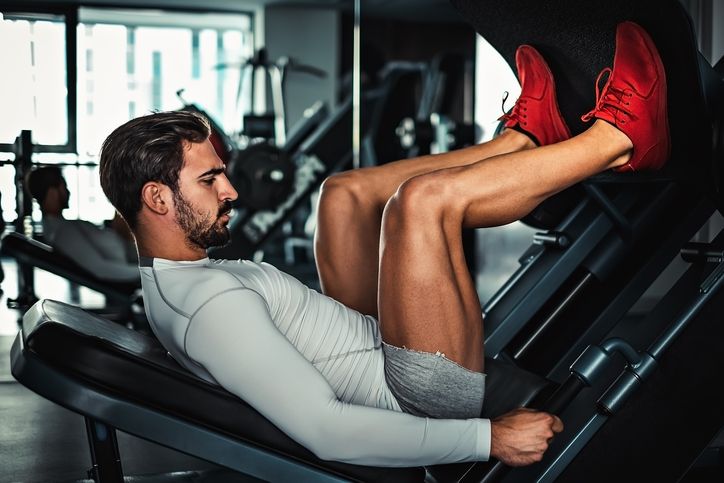
One possible use of the Smith machine is to manipulate recruitment of the lower body musculature by moving the feet out in front of you. For example, a 2002 study found that in the Smith machine squat with the feet 12 inches in front of the bar, the quads and hamstrings were fairly evenly emphasized. When the feet were placed 18 inches in front, the hamstrings and glutes received the greatest emphasis, with the quads getting only a little.
Therefore, you could occasionally use the Smith machine to hit the posterior chain with a really heavy load, since evidence shows trainees can lift about 5 percent more weight on the Smith since they don’t have to worry as much about balance. But, don’t rely on the Smith for training power—a key component of any athlete or serious lifter’s program.
Two new studies in the Journal of Strength and Conditioning Research show that when explosive lifts are measured on the Smith machine, peak and average power output are compromised. Both studies used the bench throw—a ballistic version of the bench press—but the results apply to both the upper and lower body.
Researchers found the Smith machine resulted in a significant reduction in peak force, power, and velocity in the bench throw. Power if reduced because when explosive movements are performed on a Smith machine, the load of the concentric phase increases and impairs the potentiation from the stretch-shortening cycle and there is a decrease in the stretch velocity for the eccentric phase.
References
Buddhadeev, H., Bingren, J., et al. Mechanisms Underlying the Reduced Performance Measures from Using Equipment with a Counterbalance Weight System. Journal of Strength and Conditioning Research. 2012. 26(3), 641-647.
Vingren, J., Buddhadev, J., et al. Smith Machine Counterbalance System Affects Measures of Maximal Bench Press Throw Performance. Journal of Strength and Conditioning Research. 2011. 25(7), 1951-1959.
Cotterman, M., et al. Comparison of Muscle Force Production Using the Smith Machine and Free weights for Bench Press and Squat Exercises. Journal of Strength and Conditioning Research. 2005. 19(1), 169-176.
Schwanbeck, S., Chilibeck, P. D., Binsted, G. A Comparison of Free Weight Squat to Smith Machine Squat Using Electromyography. Journal of Strength and Conditioning Research. 2009. 23(9)/2588-2591.
Copyright ©2012